
Inspection &
Maintenance Planner
From spreadsheets to a dedicated planning software
A module in GridMD, National Grid’s transmission asset planning tool
My role
Discovery research · Product strategy
Product design · Process mapping
Stakeholder alignment
Interim product management
Situation
Transmission planners built multi-year inspection schedules in spreadsheets and shared them by email. The process worked, but it depended on a lot of manual effort. Keeping each spreadsheet current took time, and every update meant sending new copies to project managers and field crews. Comparing planned work with completed work was also hard to do at scale, which made capacity planning slower than it needed to be.
Task
The product manager role was open when the project started in spring 2025, so I covered product management on an interim basis alongside my design work. My job was to discover & recommend what to build first: who the users were, how they worked, and what the business needed. The goal was a module with its own workflows, built in two phases:
Phase 1: bring scheduling into one shared, always-current place
Phase 2: add forecast vs. actual, so planners can see where plans slip
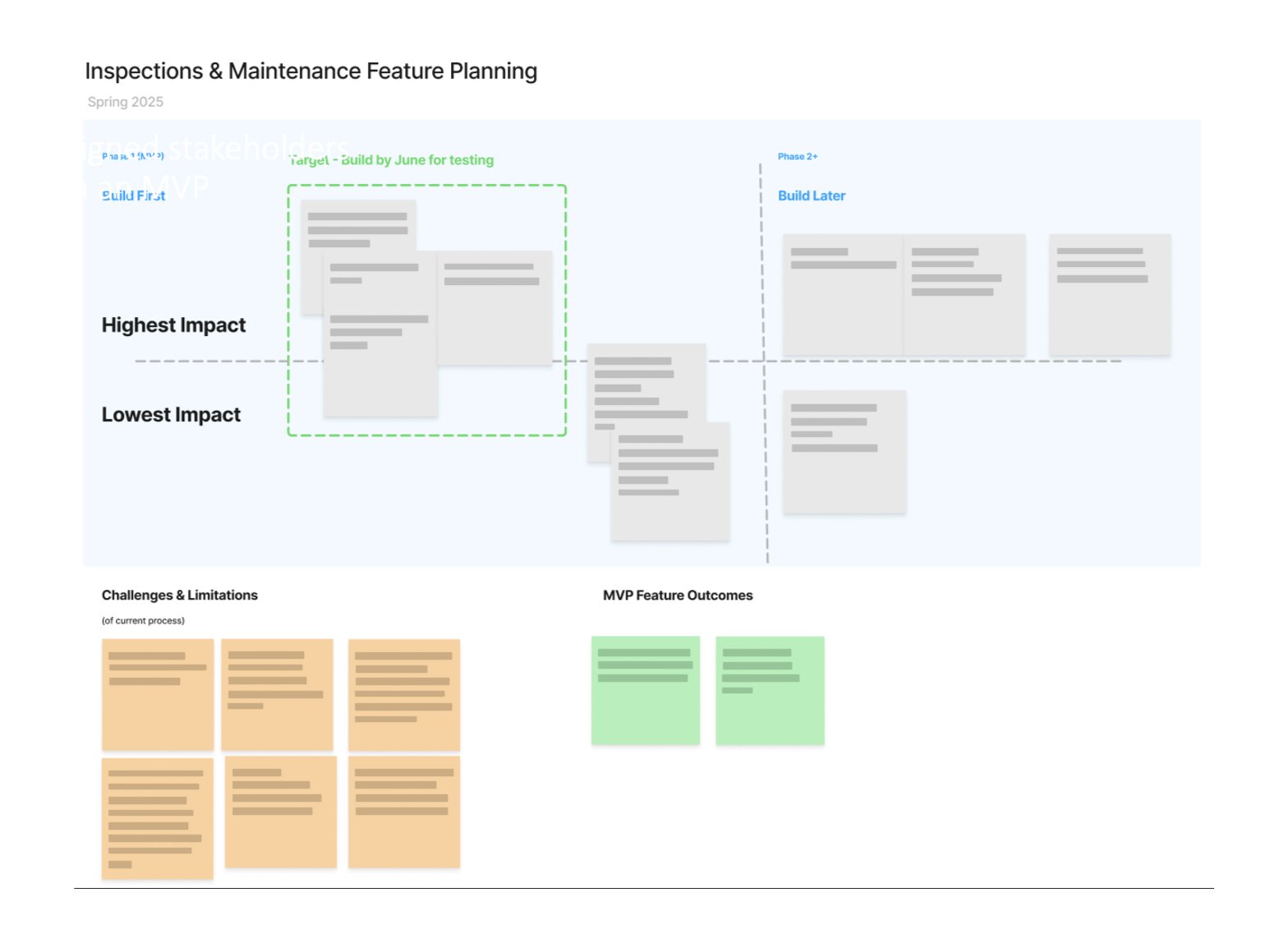
I planned and facilitated workshops with Asset Management stakeholders · Spring 2025
Capture pain points in today's process
Rank capabilities by impact & feasibility to build
Set MVP target: build by June for testing
Develop backlog and prelim roadmap to hand off to incoming Product Manager
Action
Learned how planning really worked. I talked with planners and line managers about how they built schedules, where they spent time, and who depended on their output.
Turned that into requirements. I documented the workflows and needs, then ran functional scoping sessions with business stakeholders to agree on what Phase 1 had to do.
Designed for the people doing the work. The module gives planners one current schedule with a change history, so field crews and project managers all work from the same version.
Kept the team aligned. With no dedicated PM, I helped hold the scope, sequencing and trade-offs together between the business and the delivery team.
Result
Launched, then tested against real workflows
Delivered: The MVP launched to over 50 planning managers and coordinators. One current schedule with a change history replaced the spreadsheets and email.
One year later (spring 2026): I led a workshop where planners walked through the tool as built. We logged where they still relied on outside systems or lost time. Usage analytics showed how often people used the tool, and that evidence fed into planning for future investment.
Outcome: A prioritized list of gaps and recommendations, handed to the product manager for the roadmap.
Looking ahead
Groundwork for asset-health-based planning
Today, most inspection schedules follow fixed cycles. Putting schedules and inspection history in one structured place lays the groundwork for new capabilities and planning paradigm: planning work around each asset’s condition. Over time, that could let planners focus field resources where the need is greatest.